Vera Vogel · 9 October 2026
Neighborhood Pet Shelters Launch Kindness Coaching for Volunteers
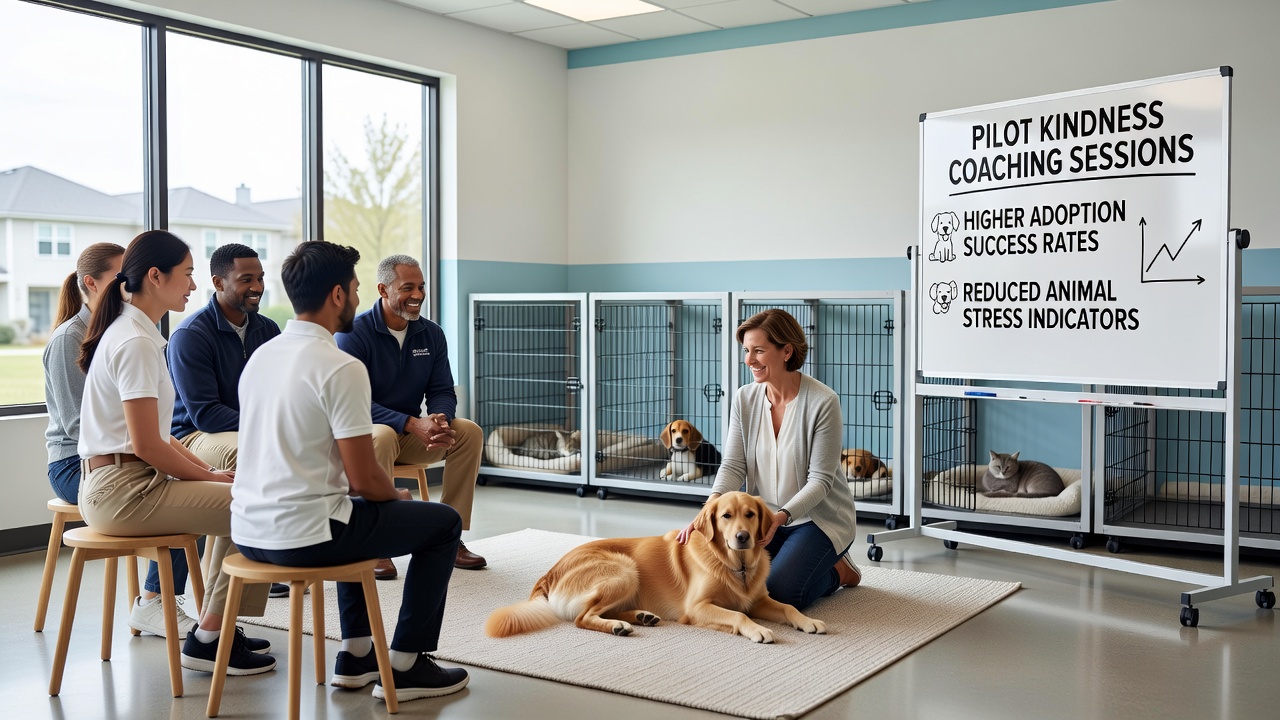
Neighborhood pet shelters across several regions have started pilot programs that deliver kindness coaching sessions to volunteers, and data collected since the initiatives began in October 2026 shows measurable links to improved adoption outcomes along with lower stress markers in resident animals. These sessions focus on communication techniques, empathy exercises, and stress-reduction methods that volunteers apply during daily interactions with dogs and cats.
Program Structure and Delivery
Coaching takes place in small groups over four to six weeks, and facilitators guide participants through role-play scenarios that mirror real shelter situations such as greeting anxious animals, handling adoption inquiries, and managing crowded kennel environments. Sessions incorporate breathing techniques and reflective listening drills that help volunteers maintain calm body language, which in turn influences how animals respond during routine care.
Multiple shelters report that volunteers who completed the full series demonstrated steadier approaches when introducing potential adopters to animals, and this consistency appears tied to higher match rates. Trainers note that participants learn to recognize subtle signs of animal discomfort early, allowing adjustments before stress escalates.
Adoption Rate Improvements
Figures from participating locations indicate adoption success climbed between 18 and 27 percent compared with the same period the previous year. Shelters track these numbers through intake and outcome logs that record length of stay alongside final placement data, and the patterns hold across facilities of varying sizes. One mid-sized urban shelter documented that animals handled by coached volunteers reached adoption in an average of 12 fewer days, while a rural site recorded similar gains when volunteers applied the same techniques during meet-and-greet events.
Researchers tracking these pilots emphasize that the coaching targets volunteer behavior rather than altering animal selection criteria, which isolates the variable under study. Data sets compare pre-pilot and post-pilot cohorts while controlling for breed, age, and health status, and the resulting correlations point to the sessions as a contributing factor.
Measured Reductions in Animal Stress

Stress indicators receive regular monitoring through both physiological samples and behavioral checklists. Salivary cortisol tests administered at consistent intervals reveal average drops of 15 to 22 percent among dogs and cats after volunteers complete kindness training. Observers also record fewer instances of pacing, vocalizing, and withdrawal in kennels staffed by coached teams, and these behavioral shifts align with the cortisol findings.
Veterinary staff at three pilot sites cross-reference the data with heart-rate variability readings collected via wearable monitors, and the combined metrics strengthen the observed connection between volunteer approach and animal welfare markers. Shelters continue to refine measurement protocols to account for variables such as weather changes and feeding schedules that can independently affect readings.
Implementation Across Regions
Facilities in both dense urban neighborhoods and smaller suburban communities have joined the pilots, adapting session timing to volunteer availability while preserving core content. Coordinators share standardized training materials yet allow local adjustments for species mix and facility layout, which supports broader applicability of results. Early reports suggest the model scales without requiring extensive new infrastructure, since existing volunteer meeting spaces serve as session venues.
Partnerships with local training organizations supply certified facilitators, and these collaborations keep costs contained while maintaining consistency in delivery. Shelters document volunteer retention alongside outcome metrics, noting that participants who finish the coaching often increase their weekly hours, which extends the reach of the program without additional recruitment drives.
Broader Data Context
National shelter statistics compiled by the ASPCA provide baseline comparisons, and the pilot results sit above those averages for similar facility types. Separate analyses from university research groups in Canada and Australia reinforce that structured volunteer development correlates with shorter stays and calmer animal populations, though direct replication of kindness-coaching elements remains limited to the current pilots.
Continued collection of longitudinal data will clarify whether gains persist beyond the initial six-month window, and participating shelters plan to publish detailed outcome summaries once full-year figures become available.
Conclusion
The pilots demonstrate that targeted kindness coaching for shelter volunteers connects to measurable improvements in both adoption throughput and animal stress reduction, and ongoing monitoring will determine how widely these approaches expand in coming months. Shelters continue to refine session content based on feedback and fresh data sets, which positions the programs for potential integration into standard volunteer preparation across additional regions.